Amsterdam is a bewitching capital that juxtaposes the provincial and the cosmopolitan with a liberal spirit that opens its arms to all. This mix is unique to the city, and disappears in favor of traditional, old-world Holland beyond the city limits. While many people are content simply to hang out in the city squares and pubs, cruising the canals, and people-watching in the greenest European capital, others would be happy to spend their entire visit browsing the world-class museums filled with treasures by Van Gogh and other old masters. Since the 16th century, Amsterdam has played several ... More
This excursion takes you to "De Zaanse Schans", a small 40-house community just to the north of Amsterdam, on the banks of the river Zaan. On the turn of the 18th century, this region was an industrial area with about 700 windmills in use. Nowadays there are only five left. The typical houses are made of green timber, have steep roofs and white window frames. A visit will be made to a windmill and a wooden shoe factory. Before returning to Amsterdam through typical Dutch scenery, you visit the medieval town of Edam.
Discover Amsterdam and its wealth of waterways by canal bus. They offer service along 3 different lines with 14 stops, near museums, shopping areas, and attractions. The pass is valid for one day.
Visit the beautiful province of the south of Holland. The first stop is Aalsmeer, the center of flower culture, for a visit to the flower auction. Proceed to Delft, a lovely 17th-century town, famous for its "Delft Blue" pottery. Continue to Rotterdam for a visit of the city and to view the world's largest harbor. Return via The Hague, the Houses of Parliament, the Peace Palace, Scheveningen, the North Sea beach resort, and visit the miniature town at Madurodam.
This tour shows you the typical Dutch countryside of polders and canals on the way to the Zaanse Schans, a well-known windmill village. Included is a visit to a wooden shoemaker, the world famous fishing villages of Volendam and Marken and a stop at a cheese farm where cheese is still made in the traditional way.
This tour will begin with a visit to a “Delft Blue” pottery, where you can admire the hand painted Delftware. Continue the tour to The Hague, the seat of the Dutch Government. Pass the Houses of Parliament and the Peace Palace. Via the lovely beach of Schevingen, travel toward the miniature city of Madurodam, where all of Holland is put together on a scale of 1/25th.
Twenty-five restored 17th-century canal houses were harmoniously integrated to create the unique Hotel Pulitzer. The hotel overlooks the city's most picturesque canals, and is close to the flower market, the Anne Frank House, the Van Gogh Museum, the Rijksmuseum, and the Royal Palace.
Historic splendor and modern facilities meet in the heart of Amsterdam – Buildings dating from the 15th, 17th, and 19th centuries make up this luxury hotel in the capital of the Netherlands. It has its own pier, is located across from the Amsterdam Central Station, attracts leisure and business travelers, and is convenient to tourist, business, and shopping areas. Amsterdam is known for its open-minded attitude.
Classic baroque-style hotel set between 2 canals in the center of Amsterdam – Join discerning guests from around the world at this splendid hotel, site of Queen Beatrix's 1966 wedding and about 200 yards from the Royal Palace and Dam Square. The luxury property has had many past lives, as a convent, a royal inn, headquarters of the Amsterdam Admiralty, and town hall.
Perched at the tip of Princes Wharf, this stylish luxury hotel is steps from the Van Gogh Museum, Anne Frank House, and other Amsterdam attractions. Bright, airy guest rooms have large windows and private balconies with garden, city, or river views.
Luxury hotel on Dam Square, in the heart of Amsterdam's historic center – This grand dame hotel, facing the Royal Palace, has its own private jetty with direct access to the canal system and is within walking distance of the Central Railway Station. The brick-and-stone structure originated in 1866 as a cafe and was later added upon and converted to a hotel.
Built on the foundations of the 13th-century Castle Heeren van Aemstel in the auto-free Kolkplein, the Golden Tulip Hotel Inntel Amsterdam Centre offers tastefully furnished rooms equipped with modern amenities. The Royal Palace and the Anne Frank House are just minutes away.
Located 12 minutes by train from Amsterdam's city center, the Golden Tulip Hotel Inntel Amsterdam-Zaandam is a favorite with tourists who prefer not to stay in the busy, boisterous city. The hotel is next to Zaandam railway station in this town that's famed for its windmills.
Amsterdam is a bewitching capital that juxtaposes the provincial and the cosmopolitan with a liberal spirit that opens its arms to all. This mix is unique to the city, and disappears in favor of traditional, old-world Holland beyond the city limits. While many people are content simply to hang out in the city squares and pubs, cruising the canals, and people-watching in the greenest European capital, others would be happy to spend their entire visit browsing the world-class museums filled with treasures by Van Gogh and other old masters. Since the 16th century, Amsterdam has played several important roles in Dutch society, but perhaps its most characteristic and pervasive has been that of lastige stad, a term that translates as being on the progressive, even radical, cutting edge of cultural and ethical evolution. Live and let live, laid-back, and liberal are terms that are frequently applied to the infinitely tolerant Amsterdam, a place that for centuries has served as a refuge for oppressed and marginalized people.
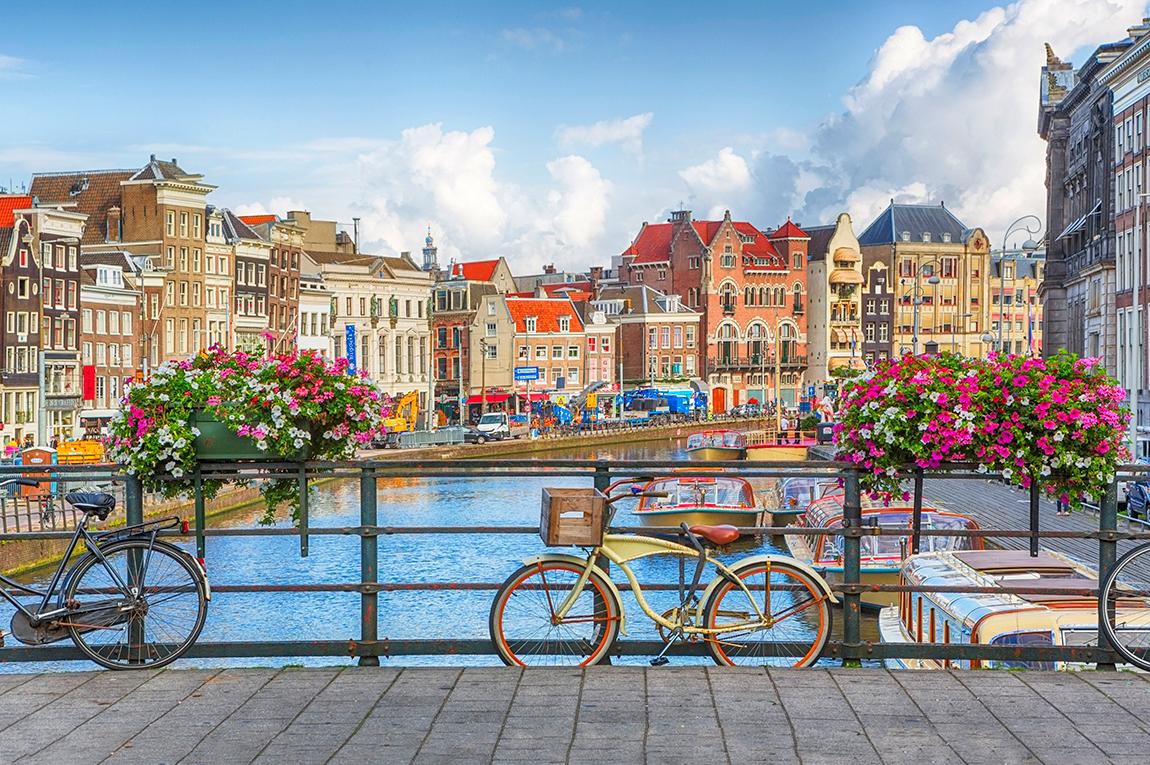
In the 1960s, Amsterdam became the counter-culture capital of Europe, and in the 1990s the city took a leading role in the on-going liberalization of society. Its citizens enjoy their multi-racial melting pot and one of the highest standards of living in the world. At night, more than 1,200 bridges spanning nearly 200 canals are illuminated with countless tiny lights that give them a fairy-tale appearance. In the morning, the gingerbread house cityscape slowly unfolds through the mist to reveal its Dutch characteristics. The streets are lined with narrow brick houses topped with ornamental or plain gables, and the amiable populace mostly walks or bicycles from place to place, having the right-of-way over cars. Grab a bike for yourself and by the time you finish up a morning ride and chain it to a bridge for a respite in a braun café, you'll feel right at home!
New York City 7 hrs
Miami 8.5 hrs
Philadelphia 7.5 hrs
Boston 7 hrs
Los Angeles 10.5 hrs
Chicago 8 hrs
Dallas-Fort Worth 8.25 hrs
San Francisco 10.25 hrs
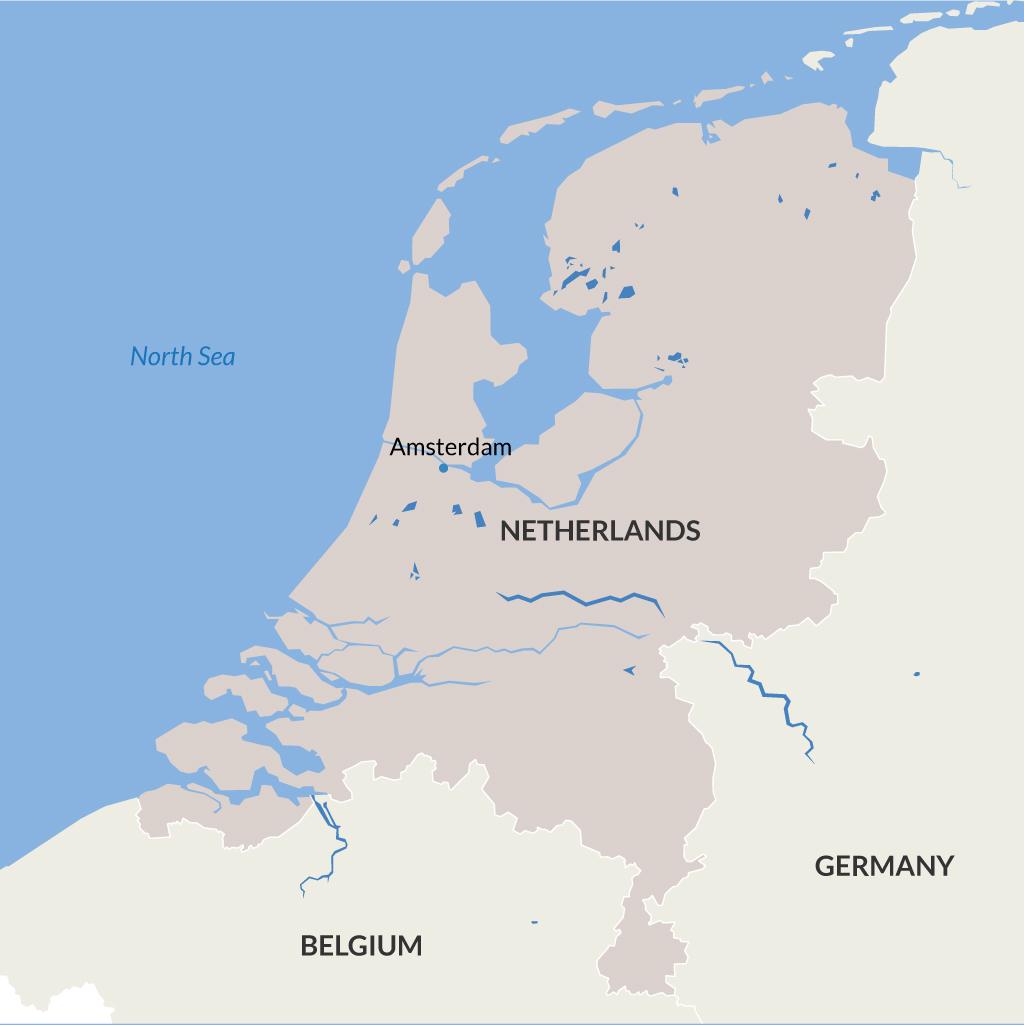
The Netherlands borders Belgium to the south and Germany to the east, with the North Sea to the northwest. Large areas of The Netherlands have been reclaimed from the sea and, consequently, one-fifth of the country lies below sea level. The country is flat and level and is criss-crossed by rivers and canals. Former sea beds, known as polders, are extremely fertile. The landscape is broken up by the forest of Arnhem, the bulb fields in the west, the lakes of the central and northern areas, and coastal dunes that are among the most impressive in Europe.
Summer is generally pleasant and mildly warm, making outdoor activities a joy with refreshing temperatures and abundant sunshine. Rain falls year-round, though most of it comes during the winter and fall months. Although the temperature rarely dips below freezing, fog and mist are ever-present because Amsterdam is partially below sea level. Nonetheless, there is plenty of sunshine in winter to accompany the cold.
Spring average 54°
Summer average 67°
Fall average 56°
Winter average 36°
Tulip season is the high season, from early-April to mid-May, and summer's lovely weather also fills the city with international visitors. Travel during these dates requires significant advance planning! Winter is very cold, resulting in significantly smaller crowds, but it has its appeal, since you don't have to share the city with so many other tourists. Aside from the weather, which you may not consider a major factor when visiting Northern Europe, there really is no bad time to visit.
The "Venice Of The North": Amsterdam is a beautiful city, marked by crisscrossing canals and bridges. Its old world charm is preserved in the typically Dutch architecture of the buildings lining the canals. Beyond the city, in the nearby countryside, endless fields of colorful tulips make for a dazzling spectacle. Throughout the city it is obvious that the people of Amsterdam prefer the bicycle as their main method of transportation, although the city is also very pedestrian friendly, too.
Unique Culture: A tradition of tolerance has lured free-thinkers for centuries, attracted by an atmosphere conducive to freedom of expression. The result is a city where no one feels an outsider, and where drug use is not frowned upon, but treated responsibly.
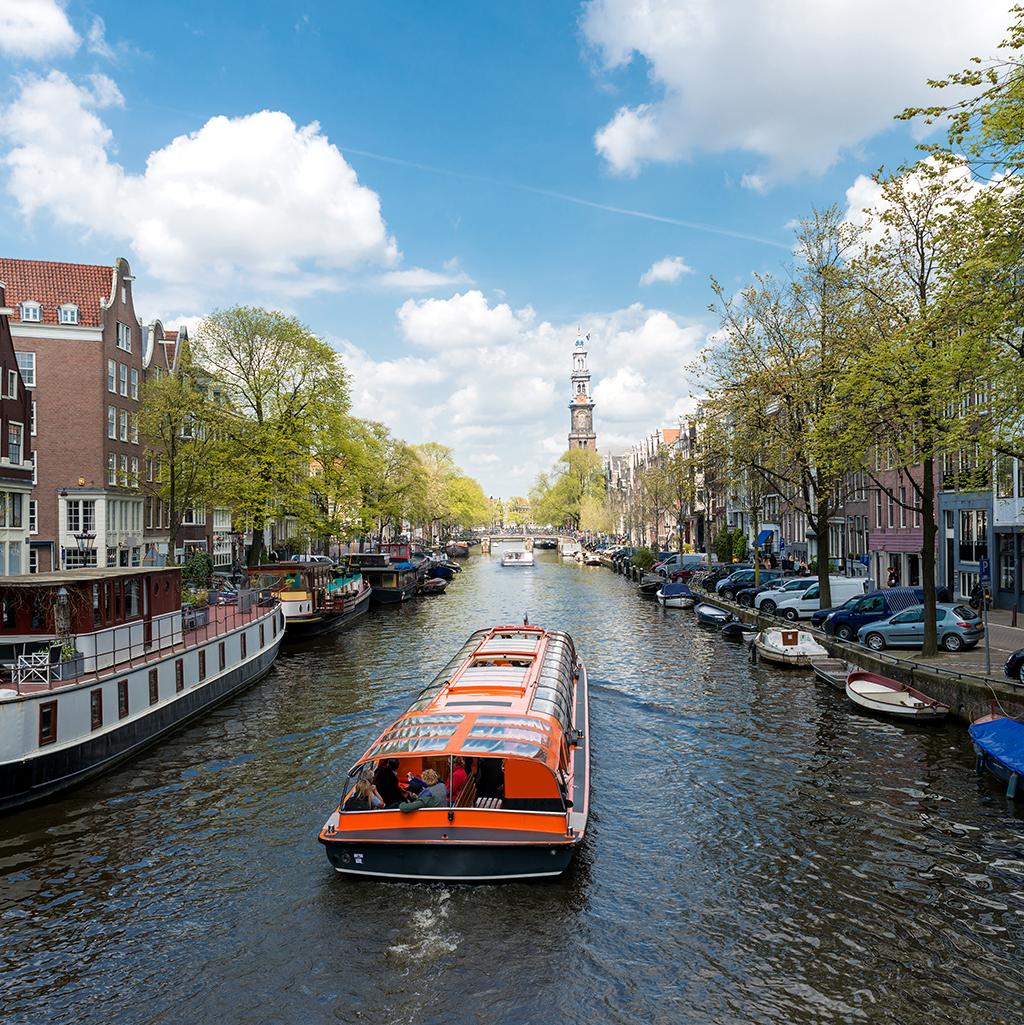
Tour Amsterdam by Canal: The best view of the city is the one taken from a boat gliding along the canals, which are constructed in a concentric pattern beginning in the city center and winding through every neighborhood. A glass-topped boat takes you right back into the golden age of the 17th century, past gabled houses, bridges, and placid waterways that are illuminated at night. Your guide points out landmarks and recounts anecdotes along the way.
Anne Frank House: This 17th-century canal-side house was the refuge for Anne Frank's family and 4 friends during 2 years of the Nazi Occupation. They hid in the annex from 1942 to 1944, a time spent almost entirely in silence and fear, as recorded in the young girl's diary. They were discovered and dispatched to concentration camps, from which only her father returned. The house is now barren, with only the bookcase that concealed the entrance to the annex remaining.
Rijksmuseum: Amsterdam's most prestigious museum houses the largest collection of Dutch and Flemish paintings in the world. The neo-Renaissance building is vast and impressive, filled with works by all the European masters, including Goya, Rubens, Van Dyck, and, of course, Rembrandt, whose "The Night Watch," has its own room. In addition to the priceless paintings, there is a fine collection of prints, Delftware, glassware, furniture, Asiatic art, French and Flemish tapestries, Dutch and German sculpture, and doll houses.
Rembrandt's House: The masterpieces are on display at the Rijksmuseum, but the majority of the great artist's legacy remains in his home. Dim lights and the 3-story house create a warm, intimate setting. Self-portraits and hundreds of his etchings, as well as those of his students, lead you on a creative pilgrimage through his home and studio.
Van Gogh Museum: This museum is a gem, containing a fantastic collection of 200 paintings, 500 drawings, and 700 letters by Van Gogh. The art is displayed chronologically, so you can study the progress from his early searching works to his later intense and driven creations of bold colors and violent strokes. The museum also houses works by his contemporaries, including Gauguin and Toulouse-Lautrec.
The Hague: Amsterdam is the capital, but The Hague is The Netherlands' seat of government and official residence of the monarchs, though they have not always chosen to live there. In 1248, Count William II of Holland was crowned king in the German city of Aachen, but chose to live at the Binnenhof Palace in what is now The Hague (which celebrated its 750th anniversary in 1998). Only 43 miles from Amsterdam, this is a beautiful and sophisticated city full of parks and elegant homes, and it also holds a prestigious position on the world scene as the site of the International Court of Justice. Also among the city's attractions are a number of fine antique shops and a weekly antiques and curios market open throughout the summer.
Zaanse Schans: This windmill village is not an open-air museum, but a living, working place with an authentic and lively atmosphere. At one time, some 10,000 windmills dotted the beautiful lowlands of Holland to distribute water, drain the polders, and grind corn via a natural, non-polluting energy source. Today, about 1,000 remain, with a third in operation. The charming ambiance of Zaanse Schans has long held sway over foreigners like Peter the Great, who made the village his workplace for a while and Napoleon, who called the area the loveliest he had ever seen.
Haarlem: This city of music and art is just a 15-minute train ride from Amsterdam's Centraal Station, and is the gateway to the reclaimed polder land. Near some of Holland's best beaches and tulip fields, in the heart of an area dotted with elegant manor houses and beautiful villages. Haarlem is also home to 2 of the country's finest museums, the Frans Hals and the Teylers. Once an important cultural center, Haarlem retains an air of dignified affluence and scenic charm.
Tulip Fields: The first tulips were brought to Holland in 1592 by the botanist Carolus Clusius, who planted them at the Hortus Botanicus in Leiden. In short order, tulips became highly popular and their trade was a highly lucrative business, buoyed by the aristocracy's fervor for them. Today, the bulbs are no less popular. The Keukenhof Gardens at Lisse have vast numbers of tulips and other flowers that cut swaths of color across the land. Many other bulb fields dot the region, between Leiden and Haarlem, for which tourism offices provide detailed "Bulb Route" maps. The efficient Dutch have also marked the roads as Bolenstreek (Bulb District).
Red Light District: Most of the history of the Red Light District - the oldest part of Amsterdam - has been glazed over by marketing. The area owes its notoriety to sex, but these days sex is secondary to souvenir shopping. The 2nd (or 3rd) rate stores full of pranks and trinkets actually bring in 1 billion Dutch florins per year from voyeuring tourists.
Leidseplein: This is, and always has been, the tourist center of Amsterdam, always a-buzz with carefree travelers eating and drinking at sidewalk cafés, enjoying the street entertainers, dancing in the clubs, watching the stage shows, or just soaking in the atmosphere. Vehicles have been banned as far back as the Middle Ages, when carts and wagons had to be left at a cart park beyond the perimeter.
Oude Kerk (Old Church): The oldest church in the city, it was built in the 13th century and has one of Amsterdam's most famous spires, as well as 47 bells that play on Saturday afternoons. The Gothic building has a vaulted interior containing stained glass scenes made in 1555, and an impressive collection of paintings and other artworks.
Nieuwe Kerk (New Church): An imposing presence on Dam Square, this church is new only in relation to the Oude Kerk. It is actually the second oldest church in the city, built in the 1400s with a 35-foot pulpit that took 19 years to carve, a gilded organ, stained glass, and the mausoleum of naval hero Admiral Michiel De Ruyter. Today, it is used for special events such as cultural exhibits and the coronation of Queen Beatrix in 1980.
Koninklijk Paleis (Royal Palace): Amsterdam was renowned as the richest city in the world when this palace was built in 1648, and its grandeur reflects the pride and position of those days. Originally built as the town hall, it took on its royal role in 1808, when Napoleon crowned his brother Louis as king of Holland. It remains the official royal dwelling although the queen and her family actually live in The Hague. Visitors are welcomed by a sculpture of Atlas carrying the globe atop the façade, and portals richly decorated with frescoes and paintings.
Bloemenmarkt (Flower Market): The world's only floating flower market laps along the banks of the Singel Canal. Moored barges bursting with color and delicate scents span the length of four blocks, selling blossoms and potted plants at very low prices.
Vondelpark: This enchanting 120-acre park was named after a famous Dutch poet and has ponds, gardens, lakes, playgrounds, cafés, and a band shell. There are many shady trees and a great deal of open space. Palm readers and musicians, including African drummers, classical quartets, and jazz singers, entertain as you relax, people-watch, and enjoy the oasis of green.
Schreierstoren: This tower, dating from 1482, is the oldest remnant of the original city wall. Its location near the harbor led to its more common moniker of the Wailing Wall, in reference to the tearful wives who came here to bid farewell to husbands who might never return from sea.
The word "cuisine" is one you probably wouldn't think to associate with Dutch cooking, given its bland stereotype. A collective Netherlands cry of "Foul!" is entirely in order, for nothing could be further from the truth. A combination of perennially open borders and centuries of exploration have shaped Holland's character as a true melting pot of ethnic diversity, and with that rich heritage came the diverse flavors of the world's kitchens to add their spices and innovations to the traditional Dutch fare. One of these is the celebrated Indonesian cuisine, which features a dish called Reischtaffel, a smorgasbord of Asian delicacies. Even the unwelcome Napoleonic Occupation had the positive effect of bringing the insuperable Gallic culinary talent to the Dutch dinner table. Local favorites include pannekoeken, which are thin crepe-like pancakes served with sweet or otherwise savory fillings, and erwtensoep, a thick pea soup with smoked sausage. Choose your setting from among elegant 17th-century dining rooms, intimate canal-side bistros, exuberant taverns, and exotic Indonesian rooms. The center of the dining and drinking establishments are the traditional Dutch bruine kroegjes (brown cafés) with their smoke-stained walls and friendly patrons. The newest additions are the grand cafés, modeled after those of Paris, Vienna, and Rome. Amsterdam's cuisine matches its personality - liberal, multi-ethnic, and adventurous, with a dash of good old-fashioned Dutch pragmatism and thrift.
Gourmet
Mangerie de Kersentuin is practically a meeting-house for traveling celebrities. Its bright cherry red and gleaming brass decor has floor-to-ceiling windows overlooking the residential street. Nothing short of excellence passes muster, so the utensils are Christofle silver-plate and the spirits are personally selected by the restauranteur. The traditional French cuisine has evolved intoan international showcase of regional recipes like lamb filet prepared with creamy salsifies, and coriander-scented vanilla sauce. Dijsselhofplantsoen 7, off Apollolaan
Dorrius: Located in an 1890 canal house, Dorrius is one of the city's most elegant dining rooms. A traditional atmosphere marked by beamed ceilings corresponds with the old-fashioned Dutch delicacies, such as Zeeland oysters, home-style marrowfat peas, and braised beef with red cabbage. Also on the menu are more contemporary entrees, including fried pikeperch with raspberry sauce, and filet steak with duck liver and truffle sauce. The wine list is extensive, but you may wish to sample the small collection of white wines from the southern vineyards of Holland. Nieuwezijds Voorburgwal 5
Highly Recommended
De Oesterbar is one of the most popular fish restaurants in Amsterdam. For 50 years, its seafood has been delivered fresh twice daily to supply a menu chock-full of Dutch seafood delicacies. The decor is bright and delightful, with gleaming white tiles bordered by fish tanks all around the downstairs, and Victorian brocades paired with etched glass in the formal upstairs hall. Choices include sole Danoise with tiny Dutch shrimp and an assorted fish platter. Leidseplein 10
Lof: There is no menu at this fashionable, and totally individual restaurant. The enthusiastic and impulsive chefs prefer to create dishes on a whim, spontaneously picking out fresh ingredients that happen to take their fancy. The resulting meals are consequently mottled, but surprisingly excellent, making the dining experience somewhat of a thrill. Oysters are a regular feature, as are vegetarian dishes. There will always be meat and fish options, as well as tasty desserts. The dining rooms are plain, but cozy, and offer full views of the kitchen. Haarlemmerstraat 62
Local Flair
Café Américain is a lofty dining room that has served as a sanctuary for the art nouveau set since its opening in 1900. Legend holds that Mata Hari, the infamous seductress and spy, held her wedding reception here. Leaded windows, tables strewn with newspapers, velvet upholstery, frosted authentic art deco chandeliers, and tall carved columns are all part of the dusky "come into my parlour" ambiance. Seafood specialties include salmon and king prawns, while meat specialties include rosé breast of duck with creamed potatoes. Sundays host great music and food with a popular jazz brunch. Leidsekade 97 at Leidseplein
Café-Restaurant Amsterdam: Based in a turn-of-the-century water pumping station, this Victorian industrial monument is now one of the city's best venues for local cuisine. Contemporary good eats are moderately priced and satisfyingly filling. Be sure to try the popular fried sweetbreads, and then moveonto the half lobster and Zeeland oysters, or other typically Dutch entrees found on the menu. The dining room was once the pumping hall, and it large and brightly lit. Dine with the locals and get a fine taste of Dutch culture. Watertorenplein 6
Romantic
La Rive overlooks the river and in summer opens onto a grassy terrace along the embankment. Two prestigious Michelin stars grace the reputation of this cozy room that feels something like a private den, with its cherry-paneled walls, brass objêts, and tall bookcases. Along one wall is a row of private booths with a view through the tall French windows toward the water. Typical specialties include grill-roasted rack of lamb with dates and Zaanse mustard. The service and wine cellar reflect the finest French traditions. Professor Tulpplein 1 off Weesperstraat
Excelsior: This formal restaurant is one of Amsterdam's most renowned, and derives its reputation from its critically acclaimed cuisine and superb service. The baronial dining rooms are marked with crystal chandeliers, elaborate moldings, crisp linens, fresh bouquets of flowers, and picture windows with views of the Amstel River. Intriguing items from the menu include smoked eel with dill, filet of halibut with caper sauce, filet of veal with leek sauce, and desserts such as orange pie with frozen yogurt, and raspberry bavaroise with mango sauce. A dinner at Excelsior is the perfect way to start a romantic evening, before setting off for a ballet or opera performance. Reservations are recommended to ensure a table. Nieuwe Doelenstraat 2-8
Nightlife can be considered the life in Amsterdam, which is well-known for its casual party and bar scene. The traditional bruine kroeg, the brown cafés, have never been better, and the new kids on the block, the grand cafés, have become very popular with the young hip crowd for their see-and-be-seen chic settings. If you feel like a "decaf" with a dusting of nutmeg, don't wander into a coffee shop! These are actually cannabis cafés, so you should head for a tea room, instead. Amsterdam's world-famous tolerance has generated one of the biggest gay scenes in Europe, with excellent bars and clubs catering to all. Live musical performances are frequent and varied, regularly featuring rock, jazz, and Latin bands all around the city's bars and clubs, which are fun and energetic without being frenetic. Cabaret and theater shows along the canal are often in English and always entertaining. For high culture, the Concertgebouw assures Amsterdam its share of refinement, regularly hosting symphony orchestras in addition to excellent dance and opera. A fun night on the town really isn't expensive, unless you never stray from the tourist strip. For the best current information, head for the Amsterdam Uitburo (AUB) in the Stadsschouwburg, where you can pick up the free bimonthly Pop & Jazz Uitlijst. For film and music, get the Week Agenda, or the alternative Queer Fish.
Sinners in Heaven: No, you didn't accidentally wander into an S&M lair, this is just part of the decor at this discotheque that's popular with the cream of the Dutch film, theater, and TV crowd. Three floors are designed with Gothic shock intent, mixing S&M with church and castle themes. Every second Sunday, the music changes to R&B, hip hop, and swing.
Lido: Vegas comes to Holland via this showy casino club. Dinner cabarets entertain high and low-stakes gamers, and pre-show dinners are all excellent.
Carré: This lavish theater on the banks of the River Amstel was once a circus, but today in place of dancing elephants and ringmasters, you find prancing ballerinas and booming baritones. In addition to ballet and opera, Dutch-language productions of the top Broadway and London musicals like Les Misérables and Evita have been on the bill. Top rock and pop bands also perform here, though nowadays they tend to prefer the new Amsterdam Arena.
The Concertgebouw: This is one of the world's most acoustically perfect concert halls, producing a distinctly rich tone. It is home to the Royal Concertgebouw Orchestra, and hosts internationally acclaimed orchestras, ensembles, conductors, and soloists. Lines of sight are splendid from every seat, and if you plan far enough ahead you can even get seats on stage! Free lunchtime concerts of chamber music and symphonies are frequent.
Hoppe: Without meaning to, the Hoppe turned into quite the tourist attraction, but locals also love this place and often stop for a drink on their way home. Be prepared to stand, because no one seems to be able to remember the last time they actually saw an empty seat. Don't let that deter you from going, though, it's worth standing for, and has been since 1670.
't Smalle: Cozy and crowded, this might be your best choice for an authentic brown café experience. Pieter Hoppe opened the place in 1786 as a liquor distillery and proeflokaal (the ubiquitous tasting houses). This bruine kroeg has expanded its service to the water's edge, with a fine terrace on the Egelantiersgracht, and even onto the water itself, on a boat moored alongside.
Carnival: See Amsterdam on the wild side! It isn't exactly wild along the lines of Rio or New Orleans, but it's a pretty good showing of dancing and partying till you drop. February
Queen's Day: This nationwide holiday for the House of Orange is celebrated with verve, and the city center fills up so tightly with celebrating throngs that it actually becomes difficult to move. A street market throughout the city hosts an enormous number of stalls. Faces, hair, clothing, buildings, and virtually all surfaces, are decorated in orange. Street music and theater boost the revelry on this highly festive and boisterous day. April
World War II Memorial Day: The entire country falls respectfully silent for two minutes at 8:00pm to honor the victims of World War II, with many of the citizens walking outdoors for the event. The rest of the day is marked by various nation-wide exhibits, ceremonies, and other assorted commemorations. May
Floating Amsterdam: The lower reaches of the Amstel River are transformed into an outdoor theater for two weeks, hosting a variety of performing arts shows and concerts. May
Holland Festival: Each year, Amsterdam, The Hague, Rotterdam, and Utrecht join together in presenting a cultural banquet of music, opera, theater, film, and dance. All the major Dutch companies, as well as visiting troupes and soloists from around the world, participate. June
Over Het IJ Festival: Aimed at the alternative crowd, this avant-garde theater, music, and dance event takes place beside the water on an old wharf. June - July
Arts Adventure: This cultural shoulder season for tourists includes more offbeat and informal events across the spectrum of performing arts than you will find in the official season. July - August
Festival of Early Music: Marvelous concerts celebrating musicfrom the Middle Ages through the Romantic Age fill the air with melodies for 3 days. August - September
Cultural Season Preview: Free performances at impromptu outdoor venues as well as theaters and concert halls host both professional and amateur groups. The shows include music, opera, dance, theater, and cabaret. August
Aalsmeer Flower Parade: For nearly half a century, Amsterdam has been the final destination for a flower parade that features a many floats carrying a variety of flowers (which in fall doesn't include tulips). The parade follows a traditional route ending at Dam Square. September
Open Monumentendag: Historical buildings and monuments that are usually not open to the public welcome visitors during this special open-house, free of charge to boot! September
Spiegelkwartier Open House: Spiegel Quarter, Amsterdam's famous art and antiques neighborhood, welcomes visitors for a special series ofexhibits throughout its many galleries and shops. November
Summers are warm and sunny, but along with your light casuals, shorts, and t-shirts you should pack a light raincoat, since showers cannot be ruled out. Winter winds can bite and you should certainly wrap up warmly in January and February for temperatures that hover just above 36°. One of the nice things about The Netherlands is that the Dutch are relaxed about clothes, so dress for comfort. Even opera audiences happily turn up in jeans - but you won't feel out of place if you feel like dressing up. Men should bring a tie and women a dressy outfit for upscale dining.
Dutch is the national language of Holland. However, English is spoken by almost everyone. In addition, many Dutch people speak German and French.
The voltage in Holland is 220 volts. Hotels may have a 110-volt or 120-volt outlet for shavers, but travelers are advised to bring a transformer and adapter for two-prong, round-prong plugs.
We strongly suggest that you verify with a consulate for the most current and complete rendering of the information outlined below.
Entry: You need only a valid passport for a visit to the Netherlands for stays of less than 3 months. No visas, health, or vaccination certificates are required, and drivers need only produce a valid driver's license from the US.
Netherlands Customs: Visitors 17 years and older may take 400 cigarettes, or 100 cigars, or 500 grams of tobacco; 1 liter of alcohol over 22 proof, or 2 liters of alcohol under 22 proof, or 2 liters of liqueur, plus 2 liters of wine; and 50 grams of perfume. Other goods must not exceed a value of approx. US$250 (check for the current Euro value). Other products are not limited. If you're carrying valuables with you, take the receipts along. When you return home, these receipts will be proof that you owned such items before your trip to Amsterdam, and thus will protect you against any unwarranted duty charges. Also, keep receipts for current foreign purchases together and accessible to show Customs officials when returning home.
US Customs: Upon coming home, citizens of the US may bring in foreign goods up to the value of $800 duty-free if they have been out of the country more than 48 hours and have not claimed these exemptions within a 30-day period. There is a 10% duty on the next $1,000 and 12% for everything over the next $1,400. Restrictions within those allowances are 200 cigarettes, 100 non-Cuban cigars, and one bottle of perfume. No meat, fruit, plants, soil, or other agricultural items may be imported. Special restrictions apply for military personnel and to the importation of antiques, automobiles, and motorcycles.
US Consulate General: American Citizen Services, Museumplein 19, 1071 DJ, Amsterdam; phone 020-575 5309, fax 020-575 5310
Netherlands Board of Tourism: Postbus 458, 2260 MG Leidschendam; phone 31 (0) 70 3705705, fax 31 (0) 70 3201654, email: info@nbt.nl
Chicago: 225 N Michigan Ave, Suite 1854, Chicago, IL 60601; phone 312-819-1636
Los Angeles: 9841 Airport Blvd, Suite 103, Los Angeles, CA 90045; phone 310-348-9339
New York: 355 Lexington Ave, 21st Floor, New York, NY 10017; phone 212-370-7360